

A man who claims he went blind as a result of the drug Ozempic has issued a warning to others.
Todd Engel, a 64-year-old from Maryland, was prescribed Ozempic in 2023 to manage his diabetes. The medication contains semaglutide, a GLP-1 drug designed for treating type 2 diabetes and aiding in weight management.
Just four months after starting the weekly subcutaneous injections, Engel noticed a troubling side effect.
Engel recounted his experience to Fox News: “I first noticed it on New Year’s Eve, 2024. I had just gotten out of the shower, was getting ready to go to work. And I said to [my wife] Shelley, ‘I can’t see in my right eye. It’s totally black. It’s totally dark in my right eye.'” He expressed his horror and distress over the sudden loss of vision.
Upon medical examination, he was diagnosed with an ‘eye stroke,’ formally known as nonarteritic anterior ischemic optic neuropathy (NAION). This condition results from diminished blood flow that damages the optic nerve, potentially leading to abrupt and irreversible vision loss.
Despite normal blood work and blood pressure, Engel continued to use Ozempic, as neither he nor his healthcare providers were aware of any link between the drug and NAION.
Tragically, ten months later, Engel experienced similar symptoms in his other eye. He admitted, “At that point in time, losing sight in both eyes, there was a tremendous amount of concern.”
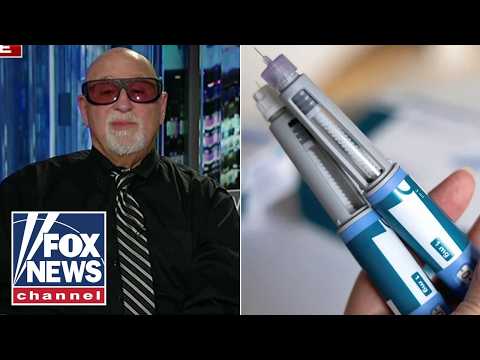
Doctors informed Engel that there were no medications or surgical options available to restore his vision. His wife, Shelley, noted that various tests found no common factors apart from Ozempic, which he ceased taking after losing sight in his second eye.
Engel stated: “I didn’t go blind — I had my vision taken from me, which was catastrophic to me and to my family.” He has since initiated legal action against Nova Nordisk, the manufacturer of Ozempic, alleging inadequate warnings about the risk of vision loss.
Reports from the New York Post indicate that numerous other patients are also pursuing legal action against the manufacturers of GLP-1 medications, such as Ozempic and Wegovy, citing claims that they led to NAION. Although a definitive causal relationship has yet to be established, the lawsuits assert that the manufacturers failed to adequately inform about potential risks.
Prior to his vision loss, Engel had been employed with Howard County Highways as a heavy equipment operator and truck driver for about 40 years. He lamented, “I can’t do that anymore, which is extremely upsetting to me. People want to be able to retire on their own accord when they want to, not when a medical catastrophic injury such as this … takes away your livelihood.”
In addition to losing his job, Engel’s vision impairment has significantly impacted his overall quality of life. He can no longer read, a favorite pastime, and must now memorize his home layout by counting steps.
Engel shared, “I know that coming in from our parking lot, there are 10 steps … nine going down into our basement, 13 going up into our bedroom.” When venturing outside, he relies on a cane and the assistance of family for daily tasks.
His grandchildren guide him, saying, “Pops, three steps straight. Then we’re gonna turn right.” Engel found this reliance embarrassing, stating, “I’m 64 years old. I shouldn’t need … my grandchildren or my wife to help me get from point A to point B.”
Shelley Engel added, “It has completely changed every aspect of our lives. There is not one piece of our lives that hasn’t changed or been touched by this throughout our whole family.” Engel reflected on the profound loss, saying, “I will never be able to see my wife’s beautiful face again, be able to see children and grandchildren, be able to play ball with them, and that is very, very upsetting to me.”
He urged others considering the medication to conduct thorough research, stating, “Had I known, had my doctor had any inkling that this could have happened … I’m sure he would have asked me and I would have said ‘absolutely not, I will deal with the diabetes … I refuse to jeopardize my eyes.'” He concluded, “If we can help one person, then that’s a pleasure to Shelley and I.”

Jonathan Orent, the family’s attorney, emphasized the need for a warning on the US Ozempic label akin to the information available to doctors and patients in Europe. Orent remarked to Fox News Digital: “It’s amazing what just a simple warning can do. That’s really what this case is about. It’s about information.”
In response, Novo Nordisk has refuted claims that the medication causes NAION. Liz Skrbkova, head of US Media and Stakeholder Relations for the company, stated, “A causal relationship between GLP-1RAs, including semaglutide, and NAION cannot be confirmed based on the totality of data.” The company referenced analyses of its clinical trials indicating minimal confirmed cases of NAION and no increased incidence in patients taking semaglutide. Novo Nordisk maintains ongoing monitoring of NAION as part of its routine drug-safety surveillance and has declared that the personal injury lawsuits filed in the US are without merit, asserting their defense in court.

